
Heat Advisory In Effect; Downtown Freight Train Says 'Hold My Beer'
A southeast Wisconsin heat advisory meets its match against the daily reality of waiting for trains to clear the Broadway crossing.
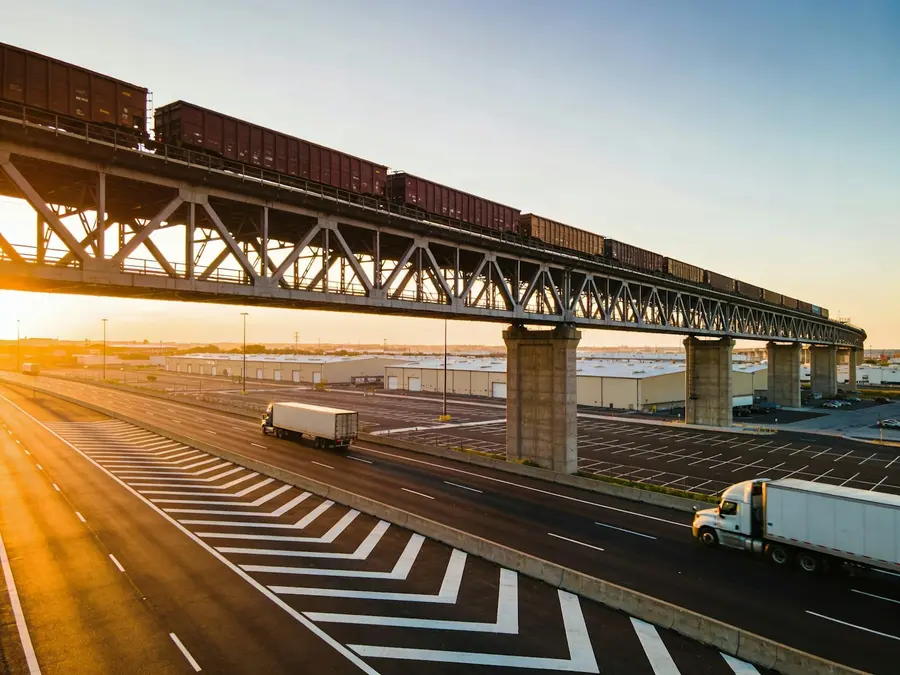
WAUKESHA — I want to state for the record that I have read the heat advisory the National Weather Service issued Saturday for all of southeast Wisconsin, and I found nothing in it about freight trains. This seems, respectfully, like an oversight.
The advisory covers a heat index running into the upper 80s through Monday evening and instructs residents to limit outdoor exertion, hydrate regularly, and check on elderly neighbors. I support all of this. I am 72 and count as one of the elderly neighbors in question. What I take issue with is the assumption, built into every heat advisory I have ever read, that a person in Waukesha has the option of not being outdoors, when a sizable share of us spend a portion of every week parked at the Broadway crossing with the windows down, because the air conditioning in a 2009 Silverado was never engineered for a fourth consecutive year of Julys like this one.
I clocked it Saturday. Noon, dashboard reading 89 degrees, four cars back from the crossing arm on Broadway, watching a freight train come to a complete stop across the intersection with roughly two-thirds of its cars still north of the crossing. It did not move again for 27 minutes. I want to be fair to the railroad here. Twenty-seven minutes is actually on the shorter end of what this crossing has produced historically. I have personally sat through a 30-minute stoppage at that same intersection, in February, in a car that was at least keeping the cold out. Saturday, the car was keeping the heat in.
A Modest Comparison
The Weather Service tells you to limit time outdoors. The train tells you to limit nothing, because it does not know you exist. These are two different kinds of advisory, and only one of them has ever apologized.
I raised this point Saturday afternoon with a man three cars ahead of me who had gotten out of his vehicle to stand in the shade of a utility pole, which I want to note was not shading his vehicle, only him. He introduced himself as Craig, declined to give a last name, and said he had been sitting there long enough to finish a bag of pretzels he kept in his glovebox "for emergencies I didn't think would be this specific." Craig said he was aware of the Newhall Avenue underpass, which runs beneath the tracks on the south side between West Avenue and Grand Avenue, and said he had considered using it, but that his trip that day required him to go north on Broadway, and the underpass, in his words, "does not go north on Broadway, it goes under the thing that's in the way of going north on Broadway, which is different."
"I am not upset with the train. I am upset that the heat advisory and the train arrived on the same day and only one of them sent a warning."
— Bob Krueger, retired Waukesha DPW supervisor
The Downtown Grid Does Not Help
Anyone tempted to detour around the crossing entirely runs into the second problem, which is that downtown Waukesha's one-way streets do not so much offer alternate routes as offer additional opportunities to end up somewhere you did not intend to be. I watched a delivery van attempt exactly this Saturday, turning off Broadway onto St. Paul Avenue in what I assume was an effort to loop around, and watched it reappear eleven minutes later from a direction that, as far as I can tell, should not have been possible from where it started. The driver did not look at the train when he rejoined the line behind it. I respected that.
Councilman Gary Puchalski, reached by phone Saturday evening, said the city takes both the heat advisory and downtown train delays "very seriously, as two separate matters," and noted that the city has no jurisdiction over freight schedules, National Weather Service advisories, or, in his words, "the particular day these two things decided to happen on top of each other." Puchalski said residents experiencing extended waits in extreme heat should run their engine and air conditioning rather than shut the vehicle off, guidance he acknowledged "does put a person in the position of burning gasoline to stay cool while stopped by a train that is not, itself, burning very much of anything at the moment."
What I Did About It
I did what I have always done, which is wait. The train cleared the crossing at 12:47 p.m. It took me another four minutes to actually reach the intersection, on account of the eleven cars now backed up behind Craig, behind me, and behind whatever became of the delivery van. By the time I got home the dashboard read 91 degrees, and my wife informed me she'd spent the wait more productively, watching the whole thing from our kitchen window, which faces the crossing and has for 40 years.
She asked if I planned to write anything about it. I told her I already had, mentally, somewhere around minute fourteen. She said that tracked.