
City Proposes Roundabout-Navigation Course Before Allowing Pedestrians On Planned Bypass Bridge
Following success with vehicle drivers, Waukesha officials suggest mandatory training for the new multi-use pedestrian bridge.
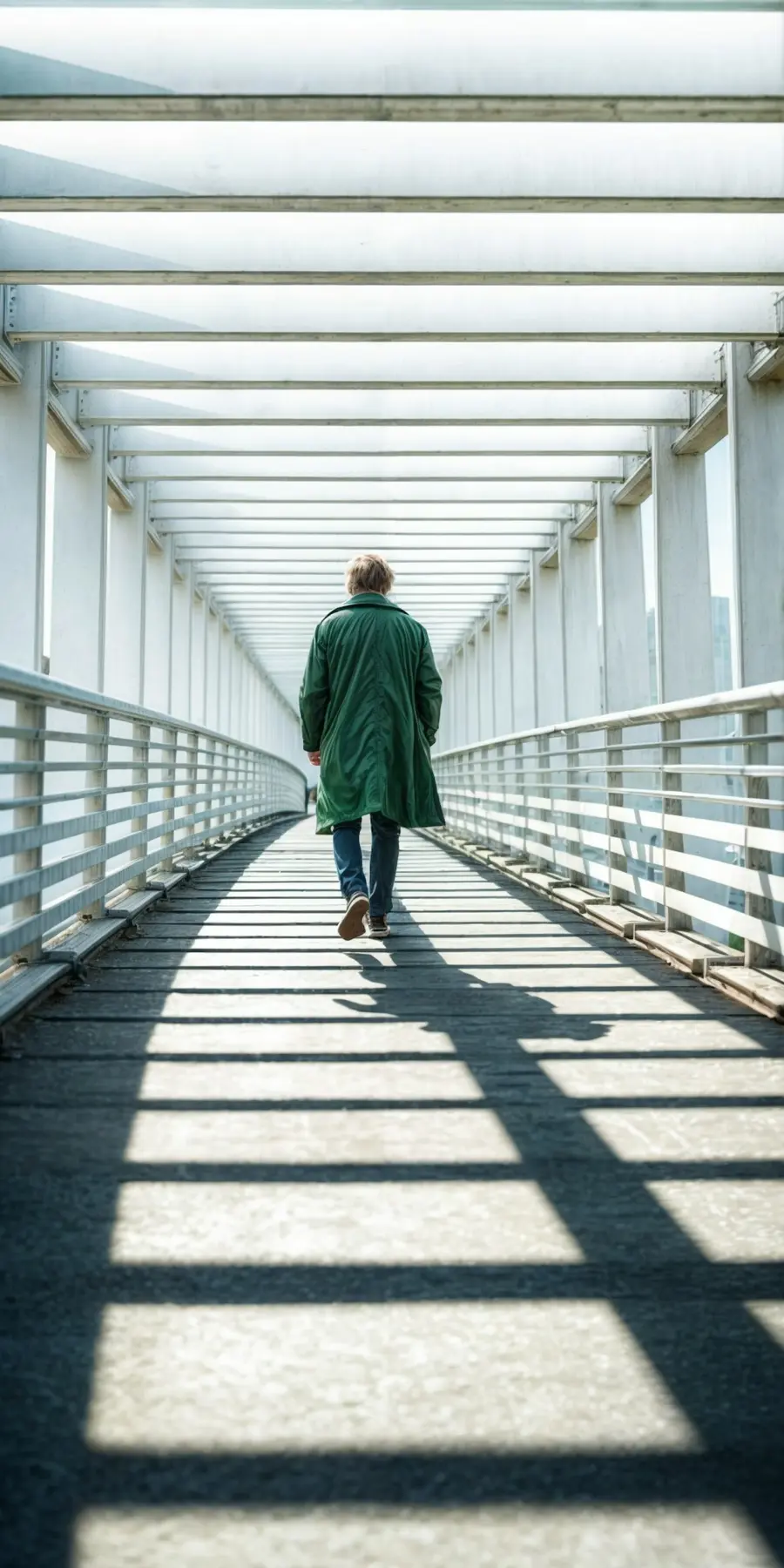
WAUKESHA — The Waukesha Common Council's proposed pedestrian bridge over the Waukesha Bypass, part of the city's 2026-2030 infrastructure plan, cleared its first review Tuesday night with an addition nobody on the agenda had requested: a mandatory training course for the people who will walk across it.
Councilman Gary Puchalski raised the idea near the end of the meeting, citing what he described as a directly comparable precedent. "We've learned from the East Avenue roundabout experience," Puchalski said, referring to the newly completed roundabout that has, by the city's own informal count, stumped an estimated 9 out of 10 first-time drivers and prompted an as-yet-unclaimed offer of a key to the city. "I don't see why a bridge should get a pass just because it doesn't have a yield sign yet."
The bridge, funded in part by a federal RAISE planning grant, would be the city's first major pedestrian and cyclist crossing of the Bypass, connecting neighborhoods on the north and south sides without requiring anyone to use the Bypass's existing vehicle interchange, a route four council members privately admitted they themselves avoid.
The Curriculum
Puchalski's proposal calls for a 90-minute orientation covering blind spots, yield etiquette between walkers and cyclists, and what he referred to only as "the proper angle for entering the bridge structure," without specifying what angle that is or who would enforce it. Attendees would receive a wallet card certifying completion, modeled on a similar card the city considered issuing for the roundabout before determining there was no non-embarrassing way to require drivers to carry one.
"It's 168 feet of bridge," Puchalski said. "That's not nothing. A person needs to know what they're walking into."
"A person needs to know what they're walking into."
— Councilman Gary Puchalski
Retired DPW supervisor Bob Krueger, who reviews the city's traffic infrastructure in a personal capacity, said he had not been asked to evaluate the bridge design but offered an opinion anyway. "A pedestrian bridge doesn't need a merge lesson," Krueger said. "It needs a middle. Put the middle in the middle and people will figure out the rest." Asked whether the East Avenue roundabout could have been saved by a similar approach, Krueger said he'd need to see it again, then drove past it twice on his way home.
The Committee
The Council voted 6-3 to send the training proposal to the Public Works Committee for further study rather than adopt it outright, with the three dissenting votes citing cost, an existing sidewalk on Sunset Drive that has never required orientation, and, in one case, a general objection to the word "curriculum" appearing in a council packet. The committee is expected to report back before the bridge's targeted 2028 opening, a timeline Puchalski called "generous, but fair, assuming nobody needs the makeup session."
City engineering staff, who designed the bridge with a single straight walkway and no merge points of any kind, declined to comment on whether a navigation course was necessary but confirmed the structure will include railings on both sides "as a baseline measure."
Puchalski said he is already drafting the course's written component, which he described as 12 questions, "maybe 14 once I think about the angle thing some more."