
F-35 Nails Its July 4th Flyover, Then Spends 41 Minutes Lost Downtown And Stuck Behind A Train
The $80 million jet cleared the parade route in under five minutes. Getting from the airport back gate to the static display at the fairgrounds took considerably longer, on account of the one-ways, and then the 10:14 Canadian Pacific freight.
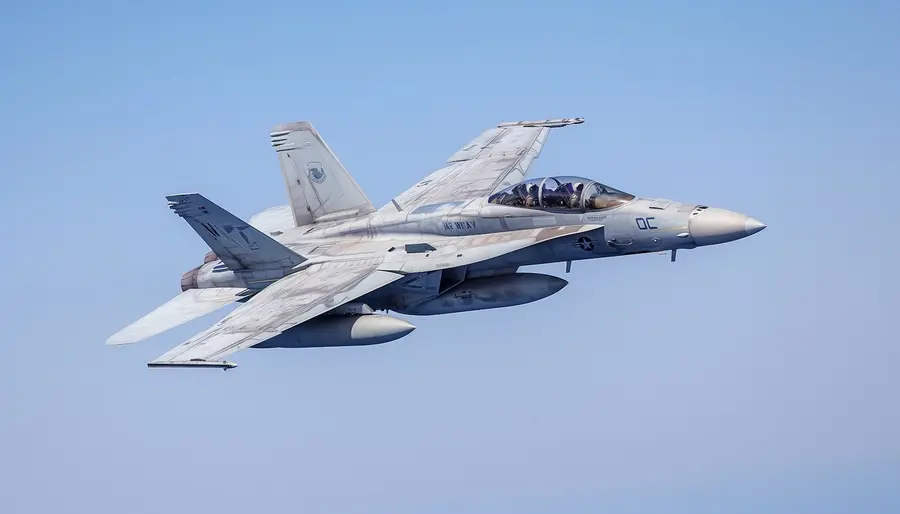
WAUKESHA — For four minutes and change on Saturday morning, an F-35 Lightning II assigned to the 115th Fighter Wing of the Wisconsin Air National Guard executed a flawless, sub-500-foot flyover of the Fourth of July parade route, banking hard over the Fox River as roughly 12,000 spectators on Main Street cheered, several children cried, and one dog on Wisconsin Avenue was reportedly "never the same." For the forty-one minutes after that, the jet did not perform particularly well at all.
The trouble began, as these things tend to in Waukesha, with a closed taxiway. With Runway 10/28's alternate taxiway at Waukesha County Airport shut for repaving, ground crews determined the fastest route to get the aircraft to its scheduled static-display meet-and-greet at the fairgrounds was a slow tow through downtown behind a pilot-truck escort — a routine, if unglamorous, five-minute drive that has been performed without incident by, among other things, a marching band trailer, two hot air balloons, and a Culver's catering van.
It was not performed without incident this time.
The Wrong Turn
According to a Guard spokesperson, the escort truck leading the F-35 down Grand Avenue attempted to turn onto St. Paul, discovered St. Paul was running the wrong direction for that maneuver, corrected onto Broadway instead, discovered Broadway had also changed its mind since the escort driver's last trip downtown in 2019, and ultimately delivered the nation's most advanced stealth fighter to the back of a Piggly Wiggly parking lot on East Avenue, nose to nose with a delivery truck that was similarly unsure how it had gotten there.
"Downtown Waukesha's one-way system was not designed to be understood. It was designed to be endured," said Councilman Gary Puchalski, watching from the sidewalk with the calm of a man who has personally missed his own driveway three times in thirty years. "I've lived here my whole life and I still take Barstow when I mean to take Broadway. This pilot has been in Waukesha for maybe forty minutes. He never had a chance."
"The jet performed flawlessly. The one-ways got it. The one-ways get everybody."
— Master Sgt. Diane Robeck, Wisconsin Air National Guard Public Affairs
Sgt. Robeck said the F-35's pilot, whom the Guard declined to name "for reasons that will become obvious," remained "in good spirits throughout" and at one point radioed the tower simply to ask whether the correct move at the East Avenue roundabout was to go around twice or exit at the first opportunity. The tower, according to two witnesses, did not have an answer either.
The jet, still under tow at roughly 4 miles per hour, was redirected back toward Broadway, where it joined regular Saturday traffic behind a Culver's delivery truck and a Buick driven by a Piggly Wiggly employee named Rhonda, who told this reporter she "did notice something big behind me" but assumed it was "one of those float trailers" and did not think much more about it until the sound.
The Train
What ended the F-35's morning commute was not the one-ways, ultimately, but the Canadian Pacific 10:14, a 142-car freight that crosses Broadway at the Soo Line grade crossing most Saturdays and has, in the memory of longtime residents, never once been early, on time, or short.
The crossing gates came down. The lights began to flash. Rhonda's Buick stopped. The Culver's truck stopped. And behind them, an $80 million supersonic stealth fighter capable of speeds in excess of Mach 1.6 came to a complete stop as well, engine idling, twenty feet from a hand-painted sign reading WELCOME TO DOWNTOWN WAUKESHA — HISTORIC & CHARMING.
It sat there for eleven minutes.
"I've cleared restricted airspace faster than I cleared this intersection."
— the pilot, reportedly, over the truck radio, according to a source who was standing close enough to hear it
Parade spectators who had drifted downtown after the flyover for funnel cake began to notice the aircraft idling at the crossing and gathered along the sidewalk to take photos, several remarking that this was, in fact, the most access to a fighter jet they had ever personally had, and that the train, while inconvenient for the Air Force, was "kind of a win for everybody else."
Bob Krueger, a retired DPW supervisor and occasional WCN opinion contributor who happened to be downtown, said he'd been telling people for years that the crossing needed an overpass. "Nobody listened when it was just me and my Silverado waiting on that train," Krueger said. "Maybe they'll listen now that it's the United States Air Force."
Cleared For Departure, Eventually
The train cleared the crossing at 10:32. The F-35 proceeded the remaining six blocks to the fairgrounds without further incident, arriving forty-one minutes behind its original ground-transit schedule, though well ahead of the average wait time for a table at the pancake breakfast tent, which organizers pegged at "a solid hour, hour and fifteen."
Sgt. Robeck said the Guard considers the flyover itself, which is the part that actually required the jet to fly, "a complete success," and that the ground portion "is being reviewed, as these things always are, by people who are not us."
Asked whether the escort route would be adjusted for next year, Robeck paused for a long moment.
"We're going to go ahead and let the city handle that one," she said.