
Data Centers' Appetite For Power Will Soon Outpace Waukesha Residents', Warns Retired DPW Supervisor
Bob Krueger reads the proposed Ratepayer Protection Act, his last three electric bills, and one very large slide, and finds the math unsympathetic.
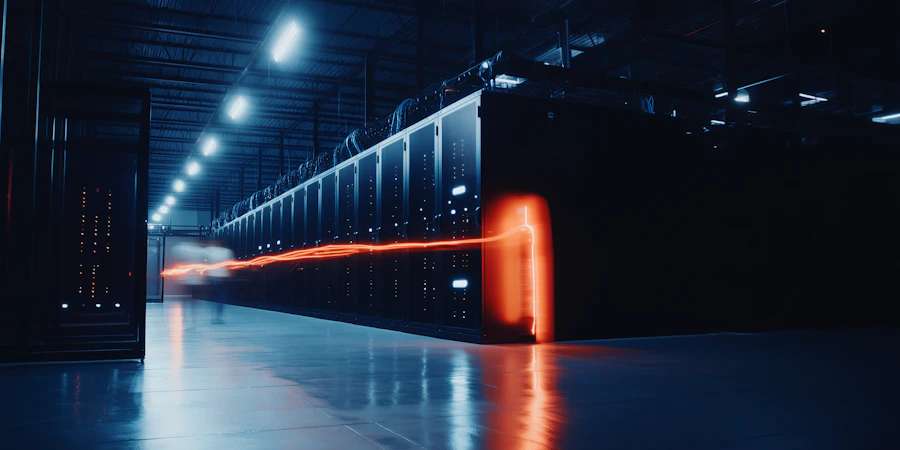
WAUKESHA — I want to open with a number, and I want to be clear that I did not come up with it. It was on a slide, at a presentation I attended in the community room at the library, and it was 100 megawatts. I wrote it on the back of a Culver's receipt so I would have it later. I have since looked at that receipt more often than I have looked at some of my relatives. A single data center of the kind now being proposed in this county can draw that much power around the clock, and I have lived in Waukesha long enough to know that when something draws that much of anything around the clock, someone in a lawn chair eventually gets the bill.
In my 34 years with the Department of Public Works I learned one thing about infrastructure that has never once been disproven: the cost of a thing does not disappear when nobody is talking about it. It moves. It moves quietly, down the line, until it arrives at a house on the north side where a retired man is standing in his basement trying to remember why the dehumidifier is on.
What The Bill In Madison Actually Says
Lawmakers in Madison are considering what has been called the Ratepayer Protection Act, and I have read the summary twice, once on paper and once out loud to my wife, who asked me to stop. The idea is simple, which is why I trust it. If a data center needs the grid upgraded to serve it, the data center pays for the upgrade. Not the residential customer. Not the retiree. Not the family on Summit Avenue whose electric bill I know about only because their mailbox is right there.
My own bill has gone up in each of the last three cycles, from $142.18 to $151.60 to $163.04. I did the arithmetic on a legal pad. If the annual increases that have been floated for residential customers land in the range of 8 to 12 percent, and I have no reason to think they will politely stop at 8, then by the time my granddaughter is in high school I will be paying for electricity the way other men pay for boats.
"A data center does not have a basement. It has no dehumidifier. It has 100 megawatts and a very good lawyer, and I have neither."
— Bob Krueger, retired Waukesha DPW supervisor
Two Proposals, Since June
I do not wish to alarm anyone, but I did read the Planning Commission minutes, which are available to the public and which I obtained by asking a woman at the front desk who did not seem to have been asked before. According to my count, two data center proposals in Waukesha County have moved forward since June. Neither was the subject of a long discussion. One item, as I read it, took less time than the vote on the folding chairs.
I raised this with Councilman Gary Puchalski, who told me he was "not opposed to computers." I said that was not the question. He said he would take it under advisement, and then asked whether a data center would qualify as a restaurant for the purposes of the Culver's per-capita proposal. I told him I would get back to him. I have not gotten back to him.
The Residential Household, As A Unit Of Measure
Here is how I explain it to people at the Piggly Wiggly, who have not asked. A residential household in this city does a great many things with electricity. It runs a refrigerator. It runs a second refrigerator in the garage, which is where the good pop is. It runs a sump pump during the wet weeks, a space heater in the room the furnace forgot, and, in the case of Ned England, a rechargeable radar gun and what I understand to be three cameras aimed at a Honda.
I mention Ned because I believe he is the last person in Waukesha who understands what it means to measure something. Ned counts lampposts from the Frame Park pedestrian bridge to gauge the air. I would ask the Planning Commission to consider that a man with a lawn chair and a radar gun is doing more to account for public resources than the average industrial energy customer, and is paying for it out of his own pocket, mostly in AA batteries.
What I Am, And Am Not, Asking For
I am not against data centers. I am not against the internet, which I use to look at the weather and, occasionally, at photographs of bridges. I am simply asking that the party that causes the substation to be built be the party that pays for the substation. This is not a radical position. This is the position of every man who has ever been handed the check at a Friday fish fry after ordering nothing.
I will grant that I have not submitted formal testimony to the legislature. I have thought about it. I drafted a letter, and my wife read it, and she pointed out that I had used the word "basement" eleven times. I told her that was the whole point. She said that was the problem.
The grid was built for us, a few thousand at a time, over about a century, by people who took a long view and a short lunch. If something is going to draw the power of a small city out of it, it should at least have the decency to leave the check on the table. I know where the receipt is. It has 100 megawatts written on the back.