
Krueger: Outage Exposes 'Fragile' Tech Dependency; City Should 'Retain Typewriter Expertise'
Retired DPW supervisor Bob Krueger says Thursday's nationwide Microsoft outage proves Waukesha needs a low-tech backup plan, starting with two working typewriters in the Parks Department.
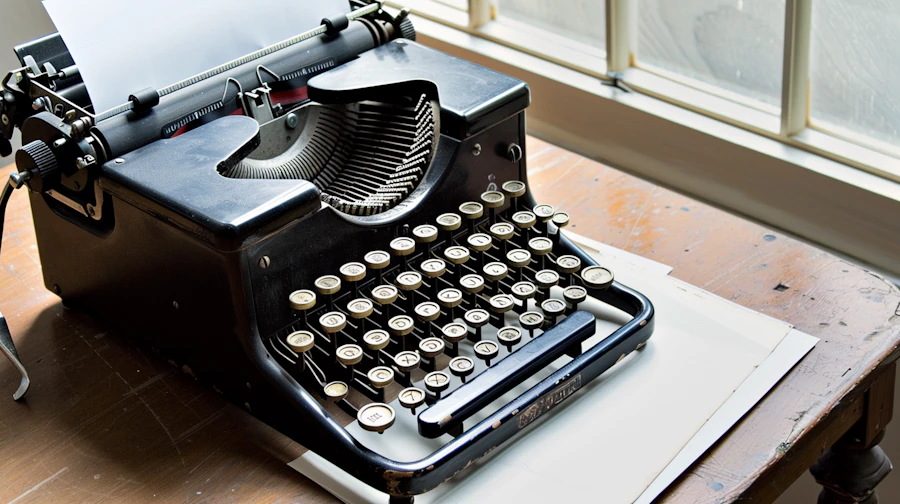
WAUKESHA — Thursday morning, for reasons nobody at the county level could explain to me in plain English, Microsoft's servers went down somewhere out in the world and took a piece of Waukesha's municipal day with them. The city clerk's office couldn't pull up a permit form. The Parks Department scheduling calendar froze mid-click. A woman two desks over from where I used to sit for 31 years reportedly stared at a loading icon for 22 minutes before giving up and calling her sister instead.
I bring this up not to pile on a software company that is, as far as I know, staffed by perfectly competent people having a bad Thursday. I bring it up because it is the fourth time in six years that one company's server trouble has quietly stopped this city's government from doing its paperwork, and nobody downtown seems to think that is worth discussing out loud.
One company, one bad morning, one frozen city
Here is the arrangement as I understand it: nearly every department in this city, from the clerk's office to the Parks Department to whoever schedules the salt trucks, runs its daily business through software owned and operated by a single company 2,000 miles away. When that company's servers have a bad morning, Waukesha's government does not merely slow down. It stops, the way a car stops when you take the key out while it's idling at a red light.
Gerald Oplinger, a facilities coordinator with the Parks Department who has worked downtown for 14 years, told me the outage knocked out the shared calendar his office uses to book the Frame Park pavilion, which meant three separate staff members spent part of Thursday afternoon writing pavilion reservations on sticky notes and hoping nobody double-booked a birthday party.
"We had six sticky notes on one monitor by 2 p.m. Two of them were for the same Saturday in December. We caught it, but only because somebody happened to notice the handwriting looked familiar."
— Gerald Oplinger, Parks Department facilities coordinator
That is not a system. That is luck, and luck is not a continuity plan.
A modest, deliberately unglamorous proposal
I am not suggesting Waukesha abandon computers. I am suggesting the city retain, as a baseline continuity measure, two working manual typewriters in the Parks Department, serviced and stored somewhere other than a supply closet behind the salt, so that when the next outage comes, whoever is scheduling the pavilion has something that does not require a server in another state to function.
I have mentioned this proposal to three city employees so far. Two laughed. The third, a 29-year-old records clerk named Priya Venkat, asked me, with what I took to be sincerity, whether typewriters need a password. I told her they need ribbon, and periodic cleaning, and that is the entire maintenance plan. She seemed genuinely relieved by how short that list was.
"I've never used one in my life, but honestly, a list of three things it needs sounds better than our current system's list of requirements, which I don't think anyone in this building has actually read all the way through."
— Priya Venkat, 29, city records clerk
Low-tech is not no-tech
Manual processes have one advantage computers will never match: they do not crash when a single company, in a building you have never seen, decides their servers need an update. A typewriter does not have an update. A typewriter has a carriage return, and the carriage return has worked the same way since before anyone currently employed by the city of Waukesha was born.
I am told the Parks Department does, in fact, already own a 1974 Smith-Corona, donated by a retiring employee some years back and currently stored, untouched, in a supply closet on the lower level. Oplinger confirmed its existence but could not say when it was last used, or by whom, or whether the ribbon still has ink in it. That is precisely the problem. An emergency backup you cannot locate on short notice is not a backup. It is a donation nobody processed.
My proposal, in full: service the Smith-Corona that already exists, acquire one more as a spare, keep both in a labeled drawer somebody can find without asking three people first, and write down, on paper, where the drawer is. Total projected cost is under $150. Total projected benefit, the next time a server farm in another state has a bad Thursday, is a city government that can still book a pavilion.
I don't expect the council to vote on this. I expect, realistically, that this column gets read by a handful of people, one of whom works in Parks, and that the Smith-Corona gets moved to a drawer somebody actually remembers. That would be enough.